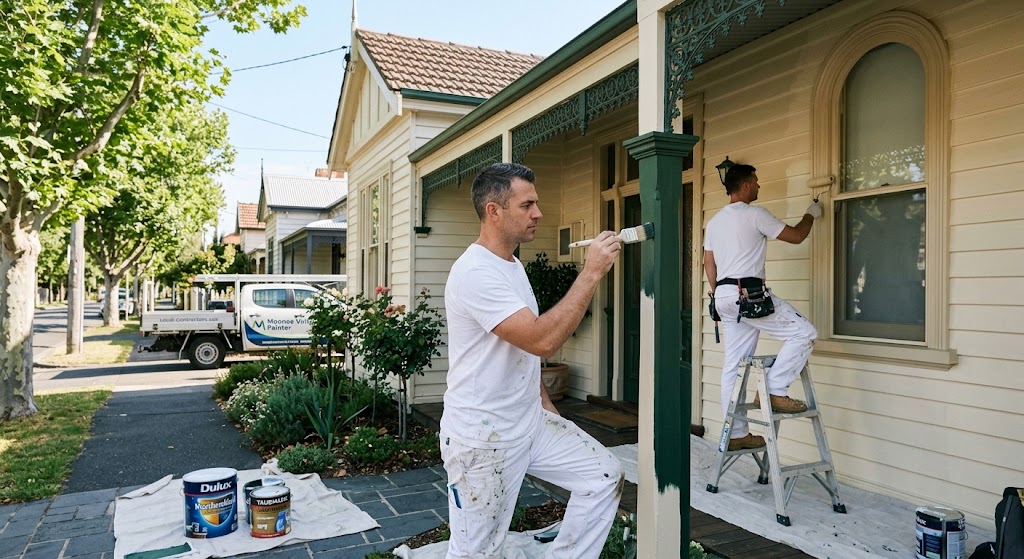
Nestled just six kilometres north-west of Melbourne’s CBD, Moonee Ponds is renowned for its leafy residential avenues, bustling Puckle Street café culture, and architectural streetscapes. From ornate late-Victorian terraces and high-gabled Edwardian weatherboards along Mount Alexander Road to mid-century brick homes and contemporary developments near Queens Park, the suburb features a diverse housing mix.
Repainting a home in Moonee Ponds is rarely as simple as buying a few tins of paint and picking up a roller. Melbourne’s volatile climate, paired with strict local council planning controls and historic timber facades, makes choosing a residential painter an important property decision.
Whether refreshing an Edwardian hallway or waterproofing an exterior against Melbourne’s four-seasons-in-one-day weather, this guide covers everything required to hire the best house painter in Moonee Ponds.
1. Local Architectural Context & Heritage Overlay Considerations
One key factor separating an average painter from a top-tier Moonee Ponds painting contractor is an understanding of local architecture and council regulations.
A significant portion of residential Moonee Ponds falls under the Heritage Overlay (HO) administered by the City of Moonee Valley. These overlays protect the historical fabric of precincts featuring Victorian, Edwardian/Federation, and California Bungalow residences.
- External Paint Controls: In designated heritage precincts, council approval or planning permits may be required to alter external colour schemes—particularly on previously unpainted masonry or heritage-listed facades. A local painter understands historical palettes (such as traditional Brunswick green, heritage cream, Indian red, and deep ochre) and knows how to adhere to council guidelines.
- Intricate Heritage Detail: Restoring decorative timber fretwork, ceiling roses, picture rails, ornate corbels, and double-hung sash windows demands patience and technical trade knowledge. Standard production painters often lack the brush control and preparation techniques required to preserve fine timber details without clogging delicate carvings.
2. Dealing with Melbourne’s "Four Seasons in One Day"
Melbourne’s weather presents real technical challenges for exterior coatings. Moonee Ponds homes endure hot, high-UV northern summer sun, sudden southern wind changes, high humidity near the Maribyrnong River valley, and damp winter chills.
A professional local painter accounts for these atmospheric conditions:
- Substrate Temperature & UV Resistance: Direct sun heats weatherboards rapidly, which can cause exterior acrylic paint to dry prematurely, leaving visible lap marks or leading to blistering. Experienced painters chase the shade around the home, working sections as the sun shifts.
- Moisture Management & Timber Expansion: Old Baltic pine and cedar weatherboards absorb winter moisture and expand, then contract during hot dry spells. Top painters use flexible, elastomeric primers and microporous acrylic exterior systems (such as Dulux Weathershield or Taubmans All Weather) that stretch and breathe without flaking or peeling.
- Mould and Mildew Resistance: Properties nestled in shaded microclimates near Queens Park or low-lying areas require anti-fungal primers and paints containing active biocide agents to prevent mould blooms on eaves and bathroom ceilings.
3. Preparation: The True Benchmark of a Master Painter
Around 80% of a long-lasting paint finish comes down to surface preparation. When evaluating prospective painters, ask detailed questions about their preparatory process.
A thorough preparation checklist should include:
- Lead Paint Testing & Containment: Many homes built in Moonee Ponds before 1970 contain lead-based paints under current layers. Scraping or dry-sanding lead paint spreads toxic dust into soil, gutters, and interior living zones. A professional painter uses lead-test kits, HEPA-filtered vacuum sanders, and containment sheeting.
- Washdown & De-greasing: High-pressure washing of exterior weatherboards removes grime, moss, and airborne traffic film from nearby thoroughfares like Ascot Vale Road or Mount Alexander Road.
- Sanding & Feathering: Old flaking paint must be scraped back to a sound edge and machine-sanded smooth.
- Gap Filling & Caulking: High-grade acrylic and polyurethane sealants applied along weatherboard joins, window architraves, and fascia boards stop moisture ingress.
- Rot Repair: Minor timber rot in window sills or verandah posts should be treated with wood hardener and epoxy fillers before any primer touches the wood.
4. Licences, Insurances, and Safety Compliance
Operating safely and legally in Victoria requires specific credentials. Do not let any tradesperson commence work on your property without verifying the following items:
- Public Liability Insurance: Ensure the painter holds active Public Liability coverage (typically a minimum of $5 million, with $10 million to $20 million preferred). This protects your home and neighbouring assets against accidental damage, such as overspray on vehicles or scaffolding mishaps.
- WorkSafe Victoria Compliance & White Cards: Every worker on-site must hold a valid Construction Induction Card (White Card) and follow WorkSafe guidelines, particularly regarding working at heights on double-storey Edwardian or Victorian pitched roofs.
- Master Painters Association (MPA) Victoria Accreditation: Membership in the Master Painters Association is a strong indicator of professionalism. MPA members follow the Australian Standard AS/NZS 2311:2017 (Guide to the painting of buildings) and agree to strict trade codes of ethics.
- Written Guarantees: A quality painter typically provides a written workmanship warranty (commonly between 5 to 7 years) alongside manufacturer product guarantees.
5. Transparent Quotes vs. Cheap Estimates: How Costs Work
When comparing painting quotes in inner-north-west Melbourne, the cheapest option often turns out to be the most expensive in the long run. Unusually low quotes usually stem from watered-down paint, skipping primers, applying only a single coat, or neglecting surface preparation.
Below is an overview of standard price ranges in Melbourne:
| Project Type | Scope of Work | Indicative Cost Range (AUD) | Key Factors Influencing Price |
| Single Room Repaint | Walls, ceiling, skirting, doors, and window frames | $400 – $900 | Ceiling height (e.g., 3.3m heritage vs 2.4m modern), plaster repairs |
| Interior (Full 3-Bedroom Home) | Full interior: hallways, living areas, bedrooms, trims, doors | $5,500 – $12,000+ | Wall condition, timber restoration, number of colours |
| Exterior (Weatherboard Home) | Preparation, wash, prime, 2 topcoats on cladding, fascia, windows | $9,000 – $22,000+ | Access/scaffolding, rot repairs, lead containment, two-storey access |
| Exterior (Brick/Render Facade) | Eaves, gutters, trims, render coating, front entry features | $4,000 – $10,000 | Render repair needs, architectural detail, masking requirements |
A reputable painter supplies an itemised quote detailing the specific paint brand, product lines, number of coats, surface prep procedure, and clear project timeframes.
6. How to Vet Painting Contractors: A Step-by-Step Selection Process
Selecting the right professional is straightforward when you apply a systematic evaluation process:
Step 1: Source Local Word-of-Mouth and Verified Reviews
Search for contractors with established presence across Moonee Ponds, Essendon, Ascot Vale, and Flemington. Check Google Business profiles, focusing on recent client feedback that mentions reliability, clean worksites, and punctuality. Look for reviews that highlight period home experience.
Step 2: Request Proof of Past Work in the Area
Ask prospective painters for photos of recent projects in the Moonee Valley area. An experienced painter will gladly show before-and-after portfolios of Victorian iron lace restoration, exterior weatherboard transformations, or interior plaster crack rectification.
Step 3: Clarify the Team Structure
Ask who will physically paint your house:
- Will the person quoting the job be on tools, or do they employ a dedicated, qualified in-house crew?
- Are parts of the job subcontracted to third parties?
- Who serves as the dedicated site supervisor for daily communication?
Step 4: Inspect the Specified Paint Brands
Top trade professionals rely on commercial-grade formulations from trusted Australian manufacturers such as Dulux, Taubmans, Haymes, or Porter’s Paints. Ensure your quote specifies the exact product tier (e.g., Dulux Wash&Wear, Dulux Weathershield, or Haymes Ultra Premium) rather than vague labels like "trade paint."
Step 5: Ask Essential Interview Questions
Before signing an agreement, verify these four questions:
- "What is your protocol if you discover rot or structural substrate failure during sanding?"
- "How will you protect our hardwood floors, plantation shutters, landscaping, and furniture?"
- "What daily clean-up procedure do your teams follow before packing down?"
- "Do you carry a moisture meter to verify wood drying levels before applying exterior coats?"
7. Maximising Value and Preserving Your Finish
A quality paint job delivers one of the highest returns on investment for Moonee Ponds homeowners, protecting the building envelope from structural weathering while lifting street appeal and market valuation.
Once the job is complete, walk through the property alongside your contractor in natural daylight, keeping an eye out for uniform sheen, clean cutting-in along cornices, and smooth finishes on all architraves. By choosing a dedicated local trade professional who understands the specific demands of Moonee Valley homes, you ensure your residence remains protected and visually appealing for years to come.
Need professional painting services?
Get Free Quote